
 EN
EN
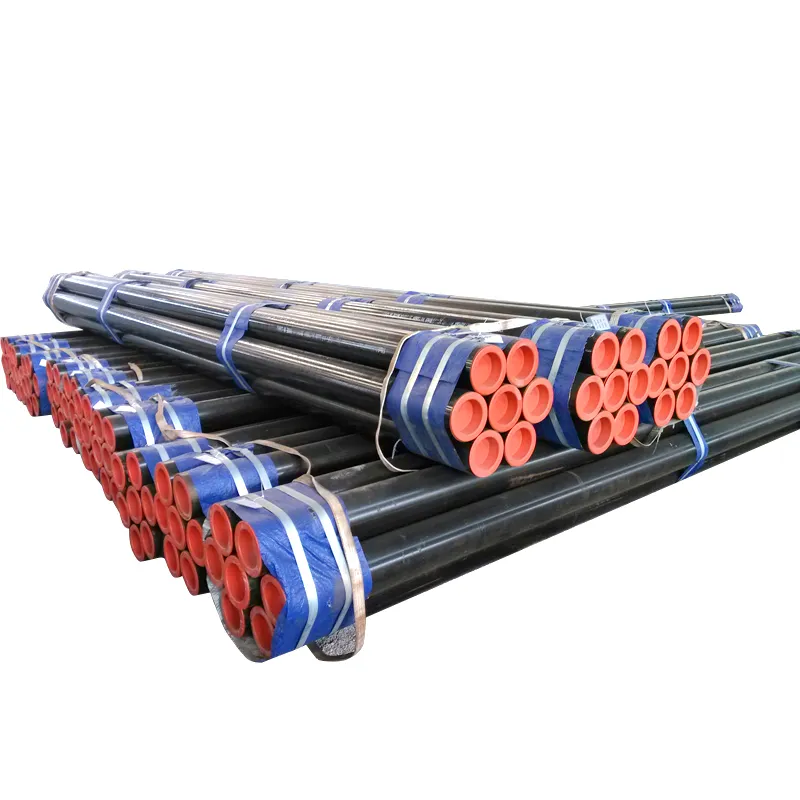
Why Corrosion Resistance Matters for Spiral Welded Pipe
Electrochemical Vulnerability at the Helical Seam
The helical weld seam introduces a fundamental electrochemical vulnerability in spiral welded pipe. Unlike seamless pipe—whose uniform microstructure offers consistent corrosion resistance—the welding process subjects the joint to thermal cycling, altering local metallurgy and creating a galvanic cell. In this cell, the heat-affected zone (HAZ) becomes anodic relative to the base metal, accelerating localized attack. Research confirms microstructural heterogeneity near the seam increases corrosion rates by 15–40% in saline environments, with chloride ions preferentially disrupting grain boundaries and promoting pitting. Under sustained stress and exposure—common in buried or marine applications—this can evolve into circumferential stress corrosion cracking (SCC). Effective mitigation hinges on post-weld heat treatment (PWHT) and tightly controlled fabrication parameters to homogenize the weld zone’s microstructure and electrochemical behavior.
Spiral vs. Seamless and ERW Pipes: Real-World Corrosion Performance
Spiral welded pipe exhibits distinct corrosion performance compared to seamless and ERW alternatives—driven primarily by seam geometry and metallurgical consistency:
| Pipe Type | Corrosion Weakness | Typical Use Cases |
|---|---|---|
| Spiral Welded | Helical weld seam | Water transmission, low-pressure oil |
| Seamless | Uniform wall but cost-prohibitive | High-pressure sour gas lines |
| ERW | Longitudinal seam vulnerability | Structural applications |
In municipal water systems where cathodic protection is practical, spiral welded pipe with cement mortar lining (CML) delivers 50-year service life—matching seamless performance at significantly lower cost. However, in high-H₂S sour service (>300 ppm), spiral welds remain susceptible to hydrogen-induced cracking (HIC), limiting their use despite advances in material selection and PWHT. For buried seawater intake pipelines, fusion-bonded epoxy (FBE) coatings reduce corrosion rates by 90% versus uncoated systems—demonstrating how robust external protection can offset inherent seam vulnerabilities.
Coating Strategies to Enhance Spiral Welded Pipe Longevity
Internal Protection: Cement Mortar Lining (AWWA C205) for Potable Water
Cement mortar lining (CML), applied per AWWA C205, forms a durable alkaline barrier inside spiral welded pipe used for potable water. The calcium-rich matrix passivates the steel surface, maintaining internal pH above 10 and suppressing electrochemical activity—particularly at the vulnerable helical seam. Field data from long-standing municipal installations confirm CML-treated pipes achieve 50+ year service lives, double that of bare steel. Beyond corrosion control, the smooth interior reduces hydraulic friction loss by up to 15%. Crucially, CML meets NSF/ANSI 61 certification for drinking water safety, preventing leaching of heavy metals or contaminants. Application requires centrifugal spinning to ensure uniform 5–15 mm thickness, followed by controlled 72-hour curing in high-humidity environments to optimize hydration and bond strength.
External Protection: FBE and Polyurethane Coatings for Buried and Offshore Use
Fusion-bonded epoxy (FBE) provides a molecularly dense, impervious shield against soil moisture, chlorides, and microbiologically influenced corrosion (MIC) in buried installations. Applied electrostatically and cured at 230°C, FBE forms thermoset crosslinks delivering >8 kV dielectric strength per NACE SP0185. For offshore or tidal-zone applications, UV-stabilized polyurethane topcoats add essential flexibility—withstanding ±2° thermal movement per meter without microcracking. Accelerated testing per ASTM B117 shows this dual-layer system survives 2,500+ hours in salt-spray chambers. When integrated with sacrificial anode cathodic protection, the combined system reduces corrosion rates by 90% in brackish environments, according to NACE IMPACT studies—extending design life beyond 30 years.
Standards, Compliance, and Quality Assurance for Spiral Welded Pipe
AWWA C200, C205, and C222 — Key Requirements for Corrosion-Resistant Fabrication
Compliance with AWWA standards forms the backbone of corrosion-resistant spiral welded pipe fabrication. AWWA C200 defines mandatory requirements for material composition, welding procedure qualification, seam integrity verification, and dimensional tolerances—ensuring structural soundness from raw steel to finished product. AWWA C205 governs internal cement mortar lining, specifying minimum thickness (typically 6.4 mm / ¼ inch), application methodology, and adhesion criteria to guarantee long-term potable water compatibility. AWWA C222 sets performance benchmarks for external polyurethane coatings—including minimum adhesion strength (>750 psi) and dielectric resistance—for buried or submerged service. Together, these standards mandate rigorous quality assurance: hydrostatic testing at 1.5× working pressure, ultrasonic testing (UT) of all weld seams, and third-party certification with full traceability from mill certificate to final inspection. This integrated framework prevents premature failure in mission-critical water infrastructure.
Optimal Applications and Limitations of Spiral Welded Pipe
High-Capacity Water Transmission: Municipal, Irrigation, and Flood Control Projects
Spiral welded pipe is the engineered choice for high-capacity water conveyance—especially in large-diameter applications (≥24 inches). Its structural efficiency, cost-effective scalability, and proven pressure resilience—validated against AWWA C200—make it ideal for gravity-fed and pressurized municipal water distribution, agricultural irrigation networks, and floodwater management systems. The ability to integrate robust internal (CML) and external (FBE/polyurethane) protection further extends service life while meeting stringent regulatory and safety requirements.
Critical Limitations in Sour Service: Risks with H₂S/CO₂ in Oil & Gas Applications
Spiral welded pipe faces well-documented limitations in sour service environments containing hydrogen sulfide (H₂S) or carbon dioxide (CO₂). The helical seam remains a focal point for sulfide stress cracking (SSC) initiation due to residual stresses and microstructural heterogeneity—even with modern low-sulfur steels and improved welding controls. Per NACE MR0175 (2023), pipelines exposed to H₂S require rigorous material qualification—including stepwise cooling tests and hardness mapping—to mitigate hydrogen-induced cracking (HIC). Because helical welds inherently concentrate stress and hydrogen diffusion paths, seamless or specially quenched-and-tempered pipe remains the industry-mandated solution for high-risk oil and gas transmission—regardless of coating or PWHT enhancements.
FAQ Section
What causes corrosion in spiral welded pipes? Corrosion occurs due to electrochemical vulnerabilities at the helical seams, especially under stress and exposure to saline or sour environments.
How does cement mortar lining enhance corrosion resistance? Cement mortar lining forms an alkaline barrier inside the pipe, passivating the steel surface and reducing friction loss.
What coatings are recommended for offshore installations? Fusion-bonded epoxy (FBE) with polyurethane topcoats is ideal, providing high resistance to moisture, chlorides, and corrosion.
What are the main limitations of spiral welded pipes? Spiral welded pipes are less suitable for sour service containing H₂S/CO₂ due to susceptibility to sulfide stress cracking and hydrogen-induced cracking.
Are spiral welded pipes compliant with industry standards? Yes, they meet standards like AWWA C200, C205, and C222, ensuring structural soundness and corrosion resistance.