
 EN
EN
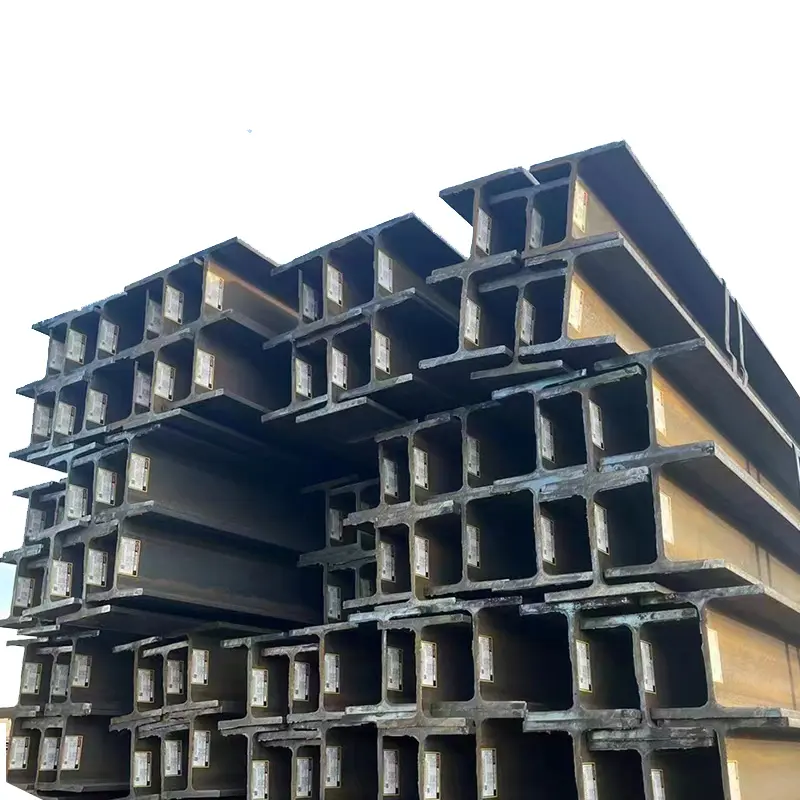
Why Durable Hollow Section Is Critical for Modern Structural Integrity
Structural integrity forms the backbone of safe, enduring buildings—and durable hollow sections are pivotal in achieving it. Unlike solid alternatives, rectangular (RHSS), square (SHS), and circular (CHS) hollow sections deliver exceptional strength-to-weight ratios while resisting torsional forces. This efficiency enables architects to design taller, lighter structures without compromising safety. Crucially, compromised structural integrity risks catastrophic failure: studies indicate nearly 30% of buildings face significant structural issues within 30 years. Durable hollow sections mitigate this risk through inherent corrosion resistance and compatibility with protective coatings like hot-dip galvanising. Their uniform geometry also simplifies connections—reducing weak points in load-bearing frameworks. For modern construction, where environmental stressors and regulatory demands intensify, specifying durable hollow sections isn’t just optimal—it’s non-negotiable for occupant safety and project longevity.
Key Structural Applications of Hollow Section in Buildings
Load-Bearing Frameworks: Columns, Trusses, and Bracing Systems
Hollow sections excel in load-bearing systems thanks to their closed geometric design, which delivers uniform strength distribution across all axes. This makes them ideal for compression-dominated columns in multi-story buildings. In truss systems, their high strength-to-weight ratio supports longer spans with less material—boosting efficiency in warehouses and industrial facilities. Their torsional rigidity outperforms open-section alternatives by 30–40% in wind simulations (Structural Engineering International, 2023), making them essential for seismic bracing where diagonal members must resist multidirectional forces. The continuous perimeter enhances buckling resistance, allowing engineers to specify slimmer profiles while maintaining required safety margins.
Architectural Hollow Section: Exposed Beams, Facades, and Canopies
Beyond engineering performance, hollow sections enable bold architectural expression through clean lines and fabrication flexibility. As exposed beams—common in airport terminals and museum designs—their smooth, unclad surfaces serve dual structural and aesthetic functions. Rectangular hollow sections form modular curtain wall systems that withstand environmental loads while enabling creative light-and-shadow patterning. In cantilevered canopies, consistent strength-to-weight characteristics support overhangs exceeding 15 meters without intermediate supports. This convergence of precision engineering and visual clarity makes hollow sections the preferred choice for signature structures.
Durability Drivers: Corrosion Resistance, Strength, and Efficiency of Hollow Section
Structural longevity rests on three interdependent pillars intrinsic to hollow sections: corrosion resistance, load-bearing strength, and material efficiency. These profiles outperform traditional open sections by resisting environmental degradation while delivering superior strength-to-weight ratios—critical for high-rise and long-span applications where premature failure carries severe consequences.
Galvanising and Coating Strategies for Long-Term Hollow Section Durability
Hot-dip galvanising remains the most widely trusted corrosion protection for hollow sections, forming a metallurgical bond that ensures decades of service—even in aggressive coastal or industrial environments. When combined with advanced epoxy topcoats, maintenance costs drop by up to 40% over 30 years (NACE, 2023). Such treatments preserve cross-sectional integrity: a 1 mm loss from corrosion can reduce load capacity by 15% at critical joints, underscoring why proactive protection is foundational—not optional.
Torsional Rigidity and Strength-to-Weight Advantage in High-Rise and Long-Span Hollow Section Use
Closed-section geometry provides inherent torsional stability, resisting twisting forces 3.2× better than open sections of equivalent weight (AISC, 2024). This allows thinner walls without sacrificing performance—cutting material use by 25–30% while maintaining equivalent strength. In seismic zones, the resulting stiffness-to-mass ratio helps dampen harmonic vibrations; under asymmetric snow loads on long-span roofs, it minimises deflection. The efficiency cascades into lighter foundations, faster erection, and lifecycle emissions reduced by up to 18 metric tons per 100 m of structure.
Selecting the Right Hollow Section: Standards, Shapes, and Performance Fit
Material Compliance: ASTM A500, A1085, EN 10210, and EN 10219 Explained
Material compliance is non-negotiable for structural integrity. Globally recognised standards—including ASTM A500 (cold-formed carbon steel), ASTM A1085 (for enhanced notch toughness), and EN 10210/10219 (hot-finished and cold-formed European norms)—define chemical composition, mechanical properties, and dimensional tolerances. ASTM A500 remains the benchmark for most projects due to its balanced weldability and strength. These specifications ensure predictable behaviour under seismic, wind, and dead loads—particularly vital in high-rise or long-span applications where margin for error is minimal.
RHSS vs. SHS vs. CHS: Matching Hollow Section Geometry to Structural Demand
Geometry directly determines structural efficiency. Rectangular Hollow Sections (RHSS) maximise moment of inertia on the major axis—ideal for beams and trusses. Square Hollow Sections (SHS) offer symmetrical stability best suited for columns and bracing. Circular Hollow Sections (CHS) provide equal strength in all directions and superior torsional rigidity—making them optimal for exposed architectural elements like pylons and façade masts.
| Shape | Optimal Use Case | Key Advantage |
|---|---|---|
| RHSS | Trusses, portal frames | High moment of inertia on major axis |
| SHS | Compression members, bracing | Symmetrical stability |
| CHS | Aesthetic façades, pylons | Equal strength in all directions |
Selecting the right geometry aligns structural demand with performance—minimising waste and maximising efficiency. For instance, CHS reduces wind drag in coastal canopies, while SHS streamlines connections in modular construction. Always verify shape-specific properties against your project’s load paths and connection requirements.
FAQ Section
- Why are hollow sections preferred for structural applications? Hollow sections offer high strength-to-weight ratios, torsional rigidity, and corrosion resistance, making them ideal for both structural and architectural uses.
- What are the primary shapes of hollow sections used in construction? The primary shapes are rectangular (RHSS), square (SHS), and circular (CHS) hollow sections, each suited to specific use cases depending on load distribution and design needs.
- How do coatings improve the durability of hollow sections? Coatings like hot-dip galvanising and epoxy topcoats significantly enhance corrosion resistance, extending the lifespan and reducing maintenance costs of hollow sections.
- What standards are applicable to hollow sections? ASTM A500, ASTM A1085, EN 10210, and EN 10219 are key standards ensuring compliance in material composition and performance.