
 EN
EN
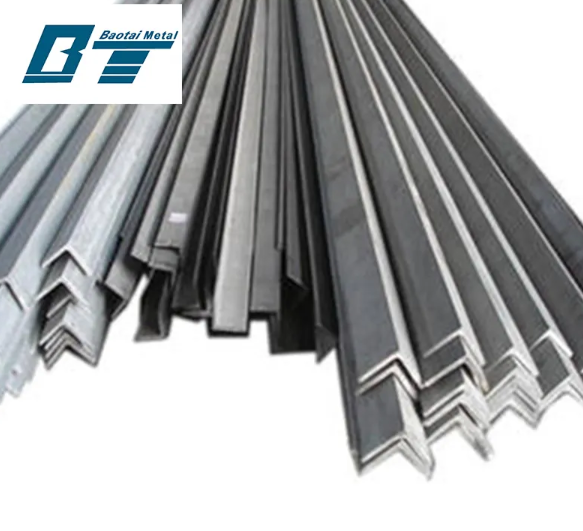
Why Angle Bar Is Ideal for Structural Reinforcement
Steel Angle Bar Strength, Durability, and Load-Bearing Capacity
Angle bars made of steel really stand out when it comes to structural strength because of their distinctive L shape and strong material composition. Those two perpendicular sides give these bars a natural ability to resist twisting and bending forces better than flat or round metal sections can manage. The way they distribute weight across their structure means we get great strength without needing excessive bulk. Fabricators often go for hot rolled or galvanized steel versions since they hold up against rust and last much longer even when subjected to constant pressure over time. What makes angle bars so special is how well they handle both pulling and pushing forces at the same time. That's why engineers rely on them for important structural components like building supports, reinforcing beams, and various types of bracing where things just cannot move around or break down after years of use.
Equal vs. Unequal Angle Bar: Matching Geometry to Load Path and Bracing Needs
When picking out angle bars for structural work, engineers generally choose between equal and unequal legs depending on how forces will actually be applied to the structure. Equal leg angles like those measuring 4 inches by 4 inches with half inch thickness give balanced support when forces come evenly across structures such as trusses, regular bracing systems, and right angle connections. For situations where loads aren't distributed equally, engineers turn to unequal leg angles, say something like 6 inches by 4 inches also with half inch thickness. These come into play for things like cantilevers sticking out from walls, roofs that slope at odd angles, or connections designed to resist earthquake forces. The longer side of these angles lines up with where most of the stress is going to hit, while the shorter side still gives enough extra support without wasting materials unnecessarily. Getting this geometry right makes all the difference when dealing with complicated load patterns, especially important stuff like buildings needing protection against strong winds or earthquakes. It's basically about making sure structures stay safe while not spending money on unnecessary steel.
Angle Bar in Primary Structural Systems: Frames, Foundations, and Concrete Integration
Reinforcing Concrete Beams, Columns, and Footings with Embedded or Surface-Mounted Angle Bar
Concrete's compressive strength is unmatched—but its low tensile capacity demands strategic reinforcement. Angle bar serves this role effectively in beams, columns, and footings, either embedded during casting or surface-mounted for retrofit applications:
- Beams: Embedded in the tension zone, angle bars significantly increase flexural capacity and crack control. Surface-mounted configurations—often welded to existing soffits—are widely used for strengthening aging infrastructure.
- Columns: Vertical angle bars tied into rebar cages improve axial load capacity and ductility, particularly under cyclic seismic loading. Externally mounted angles also provide confinement, enhancing post-yield behavior.
- Footings: Strategically placed at edges or beneath concentrated column loads, angle bars help distribute bearing pressure, mitigate differential settlement, and reduce cracking in expansive soils.
The choice between embedded and surface-mounted methods hinges on project phase and performance goals:
| Application Method | Best For | Key Benefit |
|---|---|---|
| Embedded Angle Bar | New construction | Seamless load transfer, maximum composite action |
| Surface-Mounted | Retrofits, repairs, temporary bracing | Rapid deployment, minimal disruption to occupied spaces |
Regardless of method, connection integrity—via welding, high-strength bolting, or ASTM-compliant epoxy anchoring—is essential to ensure full force transfer between the angle bar and concrete substrate. Poor detailing compromises the entire composite system, undermining intended performance under service or extreme loads.
Angle Bar as a Critical Bracing Component in Lateral Force Resistance
Roof Trusses and Gable Ends: Using Angle Bar for Wind and Seismic Stability
Steel angle bars play a critical role in maintaining side-to-side stability for roof systems. They work really well at moving those tricky forces like shear, uplift, and overturning across different joints in the structure. When we talk about diagonal bracing, most specs call for something like 3 inch by 3 inch by half inch steel angle bars following the latest ASCE 7-22 standards. This kind of reinforcement can cut down on roof movement by around 40 percent when facing those intense hurricane winds. The L shape of these bars helps them stand firm against twisting motions during earthquakes, keeping the truss shapes intact and stopping any chain reaction failures. For proper load transfer throughout the whole system, it's important that connections grab hold of both sides of the angle bar. Usually this means going with full penetration welds or setting up pairs of strong bolts. Otherwise there might be problems with things slipping out of place or parts buckling at connection points over time.
Wall Bracing in Light-Frame Construction: Angle Bar Solutions for Racking Resistance
When it comes to light frame buildings, racking remains one of the main ways these structures fail. Racking basically refers to how walls distort when pushed from the side. To combat this issue, angle bars create those triangle shaped supports that add stiffness to the whole system. Research from last year's Journal of Structural Engineering showed something pretty impressive actually. Steel angle bracing made walls about 55 percent stiffer than just using wood alone, which is quite a jump. Plus, these steel additions work right alongside regular framing methods without causing any major headaches for builders. For anyone looking at implementing this solution, there are several important things to consider first...
- Shear wall corners: Bolted angles reinforce critical load-transfer nodes
- Openings: Angles integrated into headers redistribute stress around windows and doors
- Panel joints: Continuous angles bridge sheathing gaps, ensuring uniform diaphragm action
This approach reliably meets IBC drift limits and simplifies code-compliant retrofits—especially where adding plywood or OSB sheathing is impractical.
Best Practices for Installing Angle Bar in Structural Applications
Welding, Bolted Connections, and Anchor Integration — Ensuring Load Transfer Integrity
The way something gets installed really affects how reliable the structure will be over time. When working with welds, full penetration welds are a must have, especially following those AWS D1.1 qualified procedures with matching electrodes. This becomes super important in areas prone to earthquakes where brittle fractures could spell disaster. For bolted connections, we need those high strength bolts (either A325 or A490) properly tightened using either calibrated torque wrenches or tension control equipment. If they're too loose, there'll be slippage and eventual fatigue issues. But go too tight and risk breaking the threads completely. Anchoring into concrete requires special attention too. Make sure to use epoxies that pass ASTM D4885 testing standards and figure out the right embedment depth according to ACI 318 Annex D guidelines so nothing pulls out or prys loose later on. Before locking everything down permanently, double check alignment because even a slight angle difference of just 2 degrees creates eccentric loads that wear things down faster and cut into the actual load capacity. Pick the right connection method based on what needs to happen at each joint point. Welds work best for permanent joints carrying heavy loads, bolts make sense for parts that might need adjustment in the field, and anchors are ideal when dealing with solid concrete surfaces. Getting this right matters a lot since poor load transfer is behind almost 40% of problems found during structural retrofit projects.