
 EN
EN
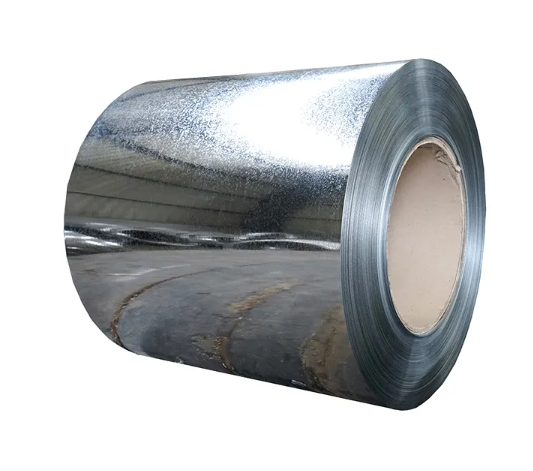
Understand Carbon Steel Coil Grades and Performance Characteristics
Carbon Content Ranges and Their Impact on Strength, Ductility, and Formability
Carbon content is the primary determinant of a steel coil's mechanical behavior and process suitability.
- Low-carbon steel coils (≤0.30% C) offer exceptional ductility, weldability, and deep-drawing capability—making them the standard for automotive outer panels, appliance housings, and beverage cans.
- Medium-carbon steel coils (0.31–0.60% C) deliver a strategic balance of strength and moderate formability, commonly used in forged or machined components like axles, gears, and crankshafts.
- High-carbon steel coils (>0.60% C) provide high hardness and wear resistance but limited cold formability; they're typically heat-treated and employed in cutting tools, high-tensile springs, and rail components.
| Carbon Grade | Carbon Range (%) | Key Attributes | Formability |
|---|---|---|---|
| Low | ≤0.30 | High ductility, excellent weldability | Excellent |
| Medium | 0.31–0.60 | Balanced strength and workability | Moderate |
| High | >0.60 | High hardness, low malleability | Limited |
Increasing carbon content raises tensile strength by more than 50% compared to low-carbon equivalents—but reduces elongation by up to 30%. This trade-off directly influences process selection: stamping and drawing favor low-carbon grades, while high-wear or load-bearing applications rely on medium- and high-carbon steels after appropriate heat treatment.
Key Mechanical Properties: Yield Strength, Tensile Strength, and Elongation in Coil Applications
Three interrelated mechanical properties define how carbon steel coils behave under manufacturing stress:
- Yield strength (typically 250–800 MPa) indicates the point at which permanent deformation begins—coils with ≥350 MPa yield strength resist springback and edge distortion during bending and roll forming.
- Tensile strength (400–1,000 MPa across common grades) reflects ultimate load capacity, guiding structural use cases such as building frames, truck chassis, and reinforcement bars.
- Elongation (% elongation at break) measures ductility; values ≥15% support complex deep-drawing or stretch-forming without cracking, while <10% often signals need for annealing or specialized tooling.
The way these material properties work together on the factory floor is pretty interesting actually. When materials have higher tensile strength, they tend to stretch less before breaking, which means manufacturers need presses with around 20 to 30 percent more power just to handle the decreased flow characteristics. Take suspension springs for example. These components need a minimum yield-to-tensile ratio of about 0.70 if they're going to maintain their springiness under load. On the flip side, companies making pots and pans care much more about how far the metal can stretch without tearing, especially since cookware often goes through several forming steps where excessive rigidity would cause problems during the manufacturing process.
Match Carbon Steel Coil Format to Your Manufacturing Process
Pancake vs. Oscillate-Wound Coils: Handling, Uncoiling Stability, and Line Integration
Flat pancake coils take up less space when stored and transported, which makes them great for factories where floor space is tight. But working with them requires special equipment like precision uncoilers that can handle active tension control and guide edges properly to avoid tangles when running over 100 meters per minute. On the other hand, oscillate wound coils have those neat, evenly spaced layers that stay put even at top speeds. This built-in stability means less problems with edges curling up or the center shifting off track, so they work well in automated production lines going past 200 meters a minute. A recent 2023 industry report found that switching to this winding method cut unexpected downtime from coil issues down by around 22%, while also cutting down on wasted material during trimming processes by as much as 8% in busy stamping operations.
Selecting Width, Thickness, and ID/OD Based on Production Volume and Processing Speed
Coil dimensions must align precisely with your equipment capabilities and production strategy:
- Width: High-volume operations (>5,000 units/month) benefit from full-width coils (up to 1,800 mm), cutting changeover frequency by 30–40%. Multi-variant shops gain flexibility—and reduce scrap—by specifying slit-width coils matched to final part dimensions.
- Thickness (gauge): Coils under 1.2 mm enable faster press cycles but require tension-regulated decoilers to prevent wrinkling or necking. Thicker gauges (>2.5 mm) improve rigidity but increase energy consumption and tool wear.
- ID/OD: Standard inner diameters (508 mm or 610 mm) fit most industrial uncoilers; verify compatibility before ordering. Outer diameters exceeding 1,500 mm require reinforced handling equipment and staging infrastructure—especially critical when crane capacity is ≤10 tons.
Always cross-check coil weight against material-handling limits to avoid staging bottlenecks and ensure safe, continuous line feed.
Verify Supplier Capabilities for Reliable Carbon Steel Coil Supply
Certifications and Quality Assurance: ASTM, EN, JIS Compliance and Third-Party Testing (Hydrostatic, NDT)
When choosing suppliers, look for ones with ISO 9001 certification and who meet key international standards like ASTM A1011/A656 in the US market, EN 10131/10142 across Europe, and JIS G3141 in Japan. These standards aren't just paperwork exercises—they actually require rigorous tracking of materials throughout production, detailed chemical analysis at the batch level, and consistent mechanical tests that prove quality over time. Every shipment should come with proper Mill Test Certificates showing real numbers for carbon content, actual yield and tensile strength measurements, plus elongation data—not just generic grade descriptions. Good suppliers often go beyond their own quality checks by bringing in independent experts for non-destructive testing and pressure validation when needed, especially important for coils that will end up in critical safety components or welding applications. The numbers tell the story too: factories that stick strictly to certified sources see around 34% fewer failures in the field compared to companies willing to accept materials without proper documentation. That kind of difference makes all the extra effort worthwhile in the long run.
Technical Support, Lead Time Consistency, and Custom Slitting or Surface Treatment Options
When looking at suppliers beyond just their certifications, it's important to consider how much actual value they bring to operations. Good technical support makes all the difference when selecting alloys, creating bend allowance models, and dealing with springback issues. This kind of support cuts down on the guesswork that usually happens during new program rollouts. Look for suppliers who consistently hit their delivery windows within about 5% of what they promise because unreliable timelines can really mess up production lines and cost money. For companies running either high mix or high volume programs, make sure potential partners can handle precision slitting with tolerances around 0.1 mm, various surface treatments like applying rust inhibiting oils, passivating metals, or adding matte finishes. Edge conditioning matters too - check if they can properly deburr parts or create specific radius profiles. Interestingly enough, automotive Tier 1 suppliers saw nearly a 20% drop in waste from downstream processing after working with vendors who provided these kinds of comprehensive services.