
 EN
EN
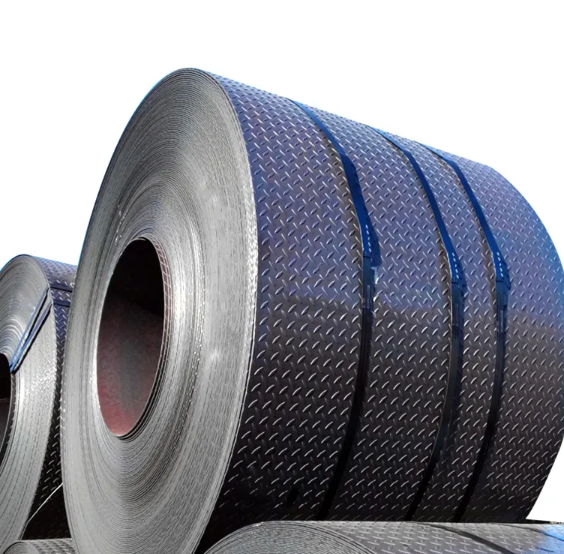
Construction and Infrastructure: The Largest Consumer of Hot Rolled Steel Plate
Demand for hot rolled steel plate is driven predominantly by construction and infrastructure projects globally, accounting for the largest market share. Market research indicates the sector propelled the hot rolled steel coil market to $202.9 Billion in 2023, with projections reaching $398.9 Billion by 2030 (CAGR 7.8%) [MarketsandMarkets, Hot Rolled Steel Coil Market Report, 2024].
Structural Frameworks in High-Rise Buildings and Bridges
What makes this material so important for today's tall buildings and big bridges? Well, it can handle massive loads and works great when welding is needed. The beams and columns built from hot rolled steel plates actually stand up pretty well against all sorts of forces weathers throw at them wind pushing sideways or earthquakes shaking things around. Most construction companies really love working with this stuff because it gives good strength for what they pay. That means engineers can build structures that pass tough safety requirements like ASTM A6/A6M over here in the US and EN 10025 across Europe while still keeping everything solid and safe for decades.
Reinforced Foundations, Highway Supports, and Rail Infrastructure
Steel remains king when it comes to ground infrastructure materials, claiming around 39% of the market according to metal industry reports from 2023. Hot rolled steel plates play multiple roles in construction projects. They strengthen concrete foundations, get shaped into highway overpasses, and lay down tracks for trains because they don't bend easily under pressure, last forever even in tough conditions, and work well with mass production methods. As cities grow and governments pour money into better transport systems, particularly in developing countries where smart city concepts are gaining traction, we're seeing steel take on even more importance in these different construction areas.
Transportation and Heavy Equipment: Hot Rolled Steel Plate for Strength and Fabrication
Truck Chassis, Trailers, and Off-Highway Vehicle Frames
The hot rolled steel plate offers really strong structural support for transportation systems. With a yield strength that often goes beyond 36,000 psi, it can handle all sorts of dynamic loads in truck frames. Plus, its good ductility means manufacturers can shape trailer parts into complex forms without them cracking during production. For off-road machines such as bulldozers, this material stands up well against impacts, which matters a lot when working over rough ground. After all, around 23 percent of equipment breakdowns come from fatigue failures according to recent industry reports. And let's not forget about money either. Because hot rolled steel costs less than other options, companies save around 18% on manufacturing when they produce standard parts in bulk quantities.
Agricultural Implements and Mining Machinery Components
Hot rolled steel plates stand up remarkably well to abrasive wear in tough industrial settings. Farmers know this when they look at combine harvesters grain hoppers made from 10 to 20 mm thick steel plates. These materials resist corrosion from all that moisture and fertilizer exposure during harvest season. Down in the mines, operators rely heavily on AR400 grade steel for their crusher jaw liners. The hardness rating around 400 HB means these parts last much longer before needing replacement. What makes hot rolled steel so popular? Well, it welds nicely to other components without issues. Plus, it can handle loads about three times what aluminum alloys manage. Most importantly, equipment using this material typically lasts between 8 and 12 years straight through continuous operations. That kind of durability makes hot rolled steel absolutely essential for any machinery that needs serious strength while maintaining shape even under extreme stress conditions.
Energy, Marine, and Industrial Systems: Hot Rolled Steel Plate in Critical Applications
Pressure Vessels, Pipelines, and Offshore Platform Structures
Hot rolled steel plates serve as vital materials for energy projects, ships, and heavy industry because they just plain hold up better than most alternatives. When making pressure vessels, this type of steel stands out thanks to its impressive strength relative to weight. That means it can safely contain dangerous stuff even when pressures and temperatures get really extreme, which is exactly what regulations like ASME BPVC Section VIII and API RP 2A require. Think about those massive pipelines stretching across countries carrying oil, gas, or water. The consistent makeup of hot rolled steel helps stop cracks from spreading and fights off corrosion caused by harsh environments. Out at sea, offshore drilling platforms rely on special versions of this steel designed specifically for marine conditions. These formulations stand up to constant saltwater contact plus all that back-and-forth movement from ocean waves and strong winds without breaking down over time.
When materials fail in these kinds of applications, operators face staggering costs around $740k every single hour just for downtime according to the IEA's Global Energy Infrastructure Reliability Report from 2023. This highlights why consistent, traceable hot rolled steel simply cannot be compromised on. The material's formability makes it possible to fabricate those really complex curves needed for things like underwater structures, wind turbine bases, and reactor housing components. Plus, its thermal stability keeps everything dimensionally sound during intense heat situations we see in refineries or when putting together power generation turbines where temperatures get extremely high.