
 EN
EN
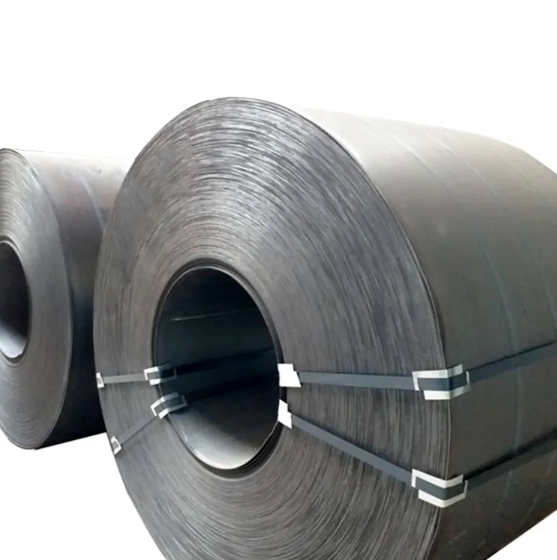
Compliance and Certification: The Foundational Gateways to Hot Rolled Steel Coil Quality
ASTM, ISO, and AISI/SAE Standards as Non-Negotiable Benchmarks
Hot rolled steel coil quality really hinges on sticking to established industry standards. The big ones are ASTM, ISO, and AISI/SAE specs that set those hard-to-budge technical requirements for things like chemical composition ranges, mechanical performance levels, and how precise the dimensions need to be. When manufacturers follow specs such as ASTM A568 for dimensional accuracy or ISO 4995 regarding surface finish, they're ensuring their products can actually hold up under stress. If a coil doesn't meet these standards, especially when it comes to things like tensile strength falling below 400 MPa for ASTM A36 grade material, there's serious trouble waiting down the road. Think bridges collapsing or machinery breaking down unexpectedly. Before buying any steel coils, make sure to check those mill certificates against the latest versions of all relevant standards. Some suppliers might still be referencing old specs from previous years without realizing it could lead to major problems later on.
Decoding Mill Test Reports (MTRs) and the Value of Third-Party Verification
Mill Test Reports or MTRs basically track important quality info for every coil batch they produce. These reports include things like chemical analysis from spectrometers, measurements of how much force it takes to deform the metal (yield strength), how stretchy it gets before breaking (elongation), and the carbon equivalent value (CEV). The problem comes when suppliers provide their own MTRs because there's always some risk of bias built right in. That's where independent labs accredited under ISO/IEC 17025 standards become really valuable. These third parties check if the CEV stays under 0.45% which research published last year showed is super important for avoiding those nasty hydrogen cracks that can form during welding. Look at pressure vessels specifically - studies from metallurgists in 2023 found companies facing nearly 7 out of 10 cases of increased legal responsibility when relying solely on manufacturer provided docs. So double checking those factory certificates against unbiased lab findings isn't just good practice anymore, it's practically mandatory for anyone serious about safety and compliance.
Mechanical Properties: Key Performance Indicators for Hot Rolled Steel Coil
Tensile Strength, Yield Ratio, and Formability Across Common Grades (A36, A572, A1011)
Tensile strength basically tells us how much stress a material can handle before it breaks completely. Yield strength is another important measure that indicates when a material starts to deform permanently instead of just bending back. For example, ASTM A36 steel usually has a tensile strength range between 400 and 550 MPa, which translates to roughly 58 to 80 ksi. On the other hand, ASTM A572 Grade 50 goes beyond this at over 450 MPa or around 65 ksi. What really matters for shaping metals though is their yield-to-tensile ratio. Grades such as ASTM A1011 Structural Steel work well for bending operations because they maintain ratios under 0.6, making them less likely to crack during forming processes. Recent studies published in the Journal of Materials Processing Technology from last year found something interesting too. When working with coils that have yield ratios no higher than 0.85, manufacturers see about an 18% reduction in springback effects during stamping operations. This makes a big difference in maintaining accurate dimensions especially when producing large quantities of parts consistently.
Hardness, Impact Toughness, and Their Direct Influence on Weldability and Cold Forming
The hardness of materials, measured using either Brinell or Rockwell methods, generally relates to how well they resist wearing down over time. However, harder materials tend to be more difficult to weld successfully. When coils go above 200 HB on the hardness scale, there's a real problem with hydrogen induced cracking because these materials just don't bend as easily anymore. Impact toughness matters too, especially when parts need to handle sudden shocks or vibrations. Testing this property involves the Charpy V-notch method at freezing temperatures around -20 degrees Celsius. Most manufacturers look for at least 27 joules of impact energy before considering material suitable for cold forming processes. Materials that fall short of this benchmark typically fail about 30 percent more often during press brake operations according to recent studies published in the International Journal of Advanced Manufacturing last year. Finding the sweet spot between different properties seems to lie somewhere between 137 and 179 HB. This range works pretty well for most machining tasks while still allowing decent welding results and maintaining necessary strength characteristics required in both structural engineering projects and car manufacturing.
Chemical Composition and Grade Integrity: Ensuring Consistency in Hot Rolled Steel Coil
Critical Element Limits (C, Mn, S, P, CEV) and How Deviations Compromise Performance
Getting the right balance of carbon (C), manganese (Mn), sulfur (S), phosphorus (P), and carbon equivalent value (CEV) matters a lot for reliable performance. Carbon controls strength, but when it goes over 0.25% in A36 steel, the material becomes brittle. On the flip side, if manganese falls below 0.80% in A572 grade, the steel won't harden properly. Sulfur levels above 0.05% cause problems during welding operations, leading to what's called hot shortness. Phosphorus concentrations greater than 0.04% create another issue known as cold cracking. The carbon equivalent value calculation based on C, Mn, and other alloys needs to stay under 0.45% to avoid those dreaded hydrogen-induced cracks in welds, according to most metallurgists who've studied this stuff. Small variations matter too. Just being off by 0.02% can cut impact toughness down by around 15%, and speed up corrosion by nearly 30% in actual structural applications. That's why checking material certificates against ASTM A568/A1011 standards isn't just paperwork it ensures everything works consistently across different production runs when it comes to forming, welding, and resisting fatigue over time.
Dimensional Precision and Surface Quality: Practical Visual and Measurement-Based Checks
Identifying Tower Shape, Sickle Bend, Edge Wave, and Surface Defects per ISO 4948-1 & ASTM A568
Verifying dimensional stability and surface integrity in hot rolled steel coil requires systematic visual and instrumental checks aligned with ISO 4948-1 and ASTM A568. Inspectors should first examine cross-sectional profiles for these critical flaws:
- Tower shape (center buckles): Measuring convexity deviation at the middle width using a laser profiler - only acceptable at 0.5% of the strip width
- Sickle bend (longitudinal curvature): Place coils vertically and assess edge alignment with calibrated straightedges
- Edge wave: Apply tension leveling and verify flatness gaps remain <3 mm/m
Surface defects demand rigorous assessment:
- Scale pits and rolled-in slag: Detect using 200-lux angled lighting and ultrasonic thickness gauging
- Scratches and gouges: Measure depth with profilometers; reject coils with penetration >0.3 mm
- Alligatoring: Guided bending test according to ASTM E290- visible cracks indicate the presence of subsurface segregation or rolling defects
A change in yield strength exceeding 10% is usually associated with these geometric or surface anomalies. Third party verification of MTR based on physical measurements (not just paper compliance) is the most effective guarantee to prevent expensive rework and on-site failures.
Table of Contents
- Compliance and Certification: The Foundational Gateways to Hot Rolled Steel Coil Quality
- Mechanical Properties: Key Performance Indicators for Hot Rolled Steel Coil
- Chemical Composition and Grade Integrity: Ensuring Consistency in Hot Rolled Steel Coil
- Dimensional Precision and Surface Quality: Practical Visual and Measurement-Based Checks