
 EN
EN
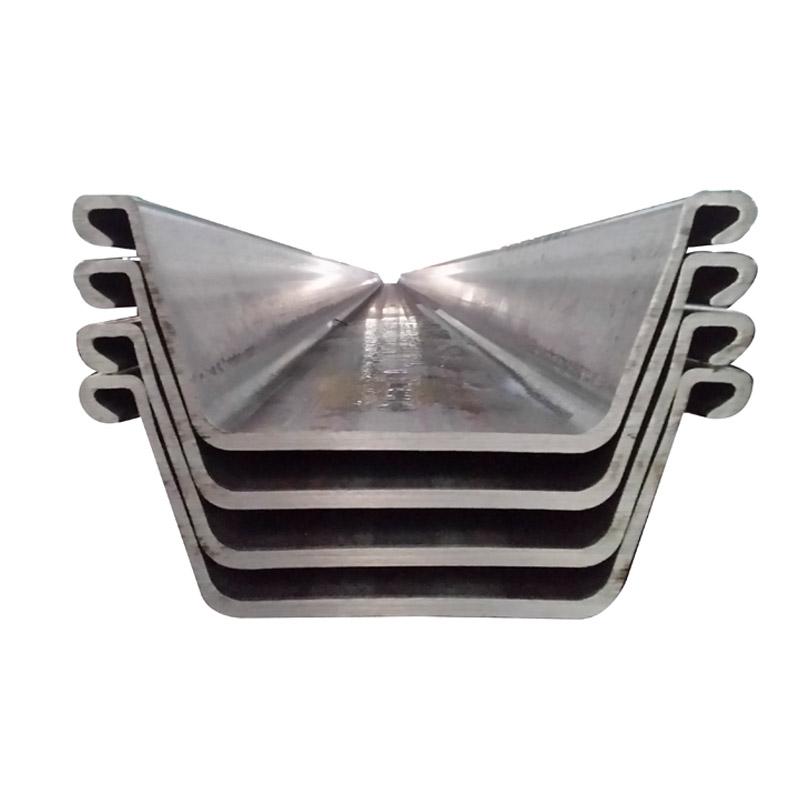
What Are Steel Sheet Piles and How Do They Function?
Steel sheet piles consist of rolled steel sections that lock together to form continuous walls for holding back earth and water. These structures typically have either a Z shape or U shape at their edges, creating watertight seals that work great in places like coastal areas needing protection, deep foundation work for basements, and systems meant to stop flooding. Compared to the old fashioned wooden supports that get thrown away after one use, modern galvanized steel versions can handle much stronger forces pushing against them about 35 kN per square meter according to GeoStruct research from last year. Plus they can be pulled out and used again on different construction sites, which saves money in the long run.
Key Differences Between Steel Sheet Piles and Other Pile Types
Three critical distinctions make steel sheet piles unique:
- Installation Speed: Require 60% less time than concrete secant walls due to elimination of curing periods
- Load Distribution: Interlocking mechanism redistributes stresses 40% more effectively than soldier pile systems
- Environmental Resistance: Zinc-coated variants last 3— longer than untreated timber in saltwater environments
Common Scenarios Where Steel Sheet Piles Are Preferred
Engineers prioritize steel sheet piles in three high-stakes situations:
- Urban Excavations: When adjacent structures sit <5m from excavation sites, their vibration-minimizing installation protects existing foundations
- Tidal Zones: Marine-grade sections prevent saltwater infiltration in port developments, maintaining soil integrity behind quay walls
- Emergency Flood Control: Rapid deployment capabilities (<48 hours for 100m sections) make them indispensable for levee reinforcement
Soil Conditions and Excavation Depth: Determining Suitability for Steel Sheet Pile Use
Evaluating Soil Type: Cohesive vs. Granular Soils
In cohesive soils like clay, steel sheet piles resist shear forces caused by soil plasticity. In granular soils such as sand or gravel, their seamless interlock system provides 20–30% higher lateral stability compared to concrete alternatives, particularly when friction angles are optimized.
How Soil Bearing Capacity Influences Steel Sheet Pile Selection
When dealing with soils that have bearing capacities under 100 kN per square meter, engineers typically go for steel sheet piles because these materials are light but still pretty tough, helping prevent those annoying settlement issues down the road. Take soft clay for instance, where bearing capacities usually sit between about 50 to maybe 75 kN/m². Steel sheets here cut down on installation stress by roughly 40 percent when compared against traditional driven concrete alternatives. Matching up pile choices with Standard Penetration Test results makes all the difference though. This connection helps get a much better read on how the soil actually interacts with different types of piles during construction projects.
Excavation Depth Thresholds That Favor Steel Sheet Pile Use
Steel sheet piles really shine when digging below 6 meters deep, since traditional temporary supports start getting too expensive at those depths. The way these sheets are designed makes it possible to drive them down as far as 18 meters while still keeping their strength intact something that soldier pile systems just cant match because they need extra bracing roughly every 3 meters along the way. When dealing with super deep excavations over 12 meters specifically, switching to steel sheet piles can cut down on shoring expenses by around 35 percent. This happens because there's no need for all those intermediate support structures that would otherwise be required in conventional methods.
Managing Lateral Earth Pressure with Deep Steel Sheet Pile Walls
At depths beyond 8m, lateral earth pressures can exceed 50 kPa in loose soils. Steel sheet piles counteract this through:
- Section modulus optimization: Z-shaped profiles provide 25% higher moment resistance than flat web designs
-
Passive soil activation: Embedding the pile toe below the excavation base mobilizes natural soil resistance
These features enable steel sheet pile walls to handle pressure differentials up to 75 kPa without tiebacks—a key reason they’re specified in 78% of urban deep excavation projects (Geotechnical Engineering Institute, 2023).
Water Table Management and Steel Sheet Piles as Cutoff Barriers
Challenges of High Water Tables in Foundation Excavations
High water tables threaten excavation stability through soil saturation and hydrostatic pressure. Projects in floodplains or coastal regions face 47% higher dewatering costs (ASCE 2022), with risks including soil liquefaction in granular soils, sump pump failures during heavy rainfall, and lateral seepage compromising shoring.
Why Steel Sheet Piles Excel as Cutoff Walls in Aquifer Zones
A recent study published in the Marine Engineering Journal back in 2023 shows that steel sheet piles work about 2 to 3 times better for containing water compared to traditional slurry walls when dealing with permeable soils. The way these steel sheets lock together forms solid continuous barriers. Field tests indicate they stop roughly 95 percent of groundwater seepage through sandy aquifers. They can handle water pressures ranging from 12 to 15 psi at depths around 20 feet below ground level. Plus, these structures do double duty acting both as foundation reinforcement and as waterproof membranes, making them quite versatile for various construction projects involving soil stabilization.
Effective Dewatering Strategies Alongside Steel Sheet Pile Installation
According to a field test conducted by USACE back in 2021, pairing steel sheet piles with wellpoint systems can cut down on dewatering energy consumption quite substantially around 34%. For those looking to implement these methods effectively, there are several key steps worth noting. First off, it makes sense to install relief wells approximately 25 feet apart along the backside of the wall structure. Monitoring what's going on beneath the surface becomes much easier with IoT piezometers that track flow rates continuously. And don't forget about how important staged excavation is either digging in 5 foot increments helps keep things balanced hydraulically speaking. These combined techniques work particularly well in situations where groundwater levels sit at three feet or less below the actual ground level.
Load Requirements: Balancing Lateral and Vertical Demands in Design
Steel sheet pile walls must withstand complex load combinations, requiring engineers to balance lateral pressures with vertical bearing demands.
Quantifying Lateral Loads from Surcharge and Seismic Activity
Lateral forces dominate in applications like roadway embankments or seismic zones. A 2023 geotechnical study found seismic activity can increase lateral earth pressures by 30–50%, necessitating thicker sections or reduced spacing between interlocks to maintain stability.
Assessing Vertical Load Demands in Retaining Wall Applications
While primarily designed for lateral resistance, steel sheet piles in hybrid systems (e.g., combi-walls) can support vertical loads up to 800 kN/m when driven into dense bearing strata. This capability is vital in urban excavations where cranes or temporary structures impose downward forces on shoring.
Controversy Analysis: Can Steel Sheet Piles Truly Support Heavy Vertical Loads?
There's still some disagreement about if steel sheet piles can handle substantial vertical loads effectively. Some engineers have raised concerns based on real world problems where interlocks slipped during repeated loading cycles in coastal flood protection systems. On the flip side, many professionals argue from actual field experience that these structures work well when properly designed. Take bridge abutments for example, where steel sheet pile walls have successfully supported loads around 12 meganewtons. This was achieved through better interlock designs and the addition of grouted toe sections at the base. The key takeaway seems to be that with careful engineering attention to detail, steel sheet piles can indeed carry heavy vertical loads safely, though they require proper design considerations unlike standard applications.
Best Practices for Load Distribution Using Interlocked Steel Sheet Piles
| Factor | Lateral Load Optimization | Vertical Load Enhancement |
|---|---|---|
| Interlock Type | Double-locked for shear resistance | Welded clutches for moment transfer |
| Embedment Depth | 1.5— excavation depth | 2— depth + rock socketing |
| Corrosion Allowance | +1 mm for marine environments | +2 mm at load-bearing interlocks |
Integrating finite element analysis with real-time field instrumentation enables precise monitoring of stress redistribution, minimizing overload risks in mixed-load scenarios.
Material and Environmental Factors Impacting Steel Sheet Pile Longevity
Hot-Rolled vs Cold-Formed Steel: Performance and Cost Considerations
Hot-rolled steel sheet piles offer superior strength and interlock integrity, making them ideal for high-stress environments. Though 15–20% more expensive upfront due to manufacturing intensity, their 50+ year service life justifies the investment. Cold-formed piles suit temporary, budget-constrained projects but exhibit reduced stiffness under lateral loads.
Corrosion Risks in Marine and Industrial Environments
In submerged marine zones, corrosion rates exceed 0.5 mm/year. Industrial sites with acidic groundwater (pH < 4.5) accelerate pitting corrosion, potentially reducing structural capacity by 30% within a decade.
Mitigation Strategies: Cathodic Protection and Corrosion Allowances
Galvanic cathodic protection extends service life by 25–40 years in aggressive environments. Adding 2–3 mm sacrificial thickness—a proven corrosion allowance strategy—delays penetration failures by up to 15 years in marine applications.
Sustainability and Lifecycle Management of Steel Sheet Piles
Steel sheet piles are 90% recyclable, with 70% of recovered material reused in new construction. Lifecycle assessments show that hot-rolled sheet piles reused across three project cycles reduce carbon emissions by 60% compared to single-use concrete alternatives.
Table of Contents
- What Are Steel Sheet Piles and How Do They Function?
- Soil Conditions and Excavation Depth: Determining Suitability for Steel Sheet Pile Use
- Water Table Management and Steel Sheet Piles as Cutoff Barriers
- Load Requirements: Balancing Lateral and Vertical Demands in Design
- Material and Environmental Factors Impacting Steel Sheet Pile Longevity