
 EN
EN
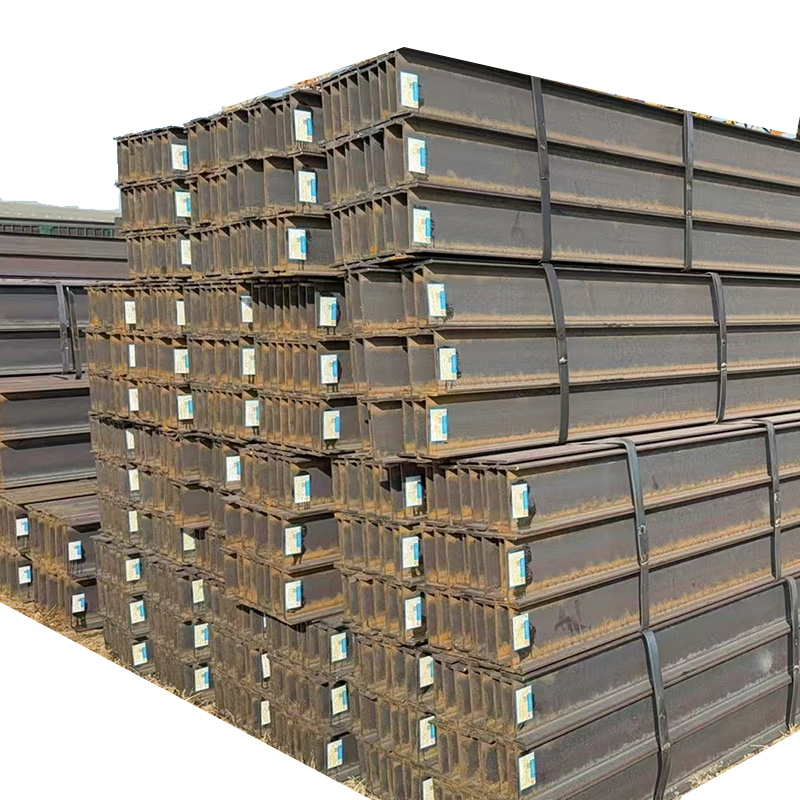
H Beam Structural Design and Load-Bearing Mechanics
Understanding the H-shaped cross-section and its engineering advantages
H beams have this distinctive shape with two wide flat parts on either side connected by a central vertical section. This configuration gives them good resistance against bending forces coming from different angles. Research published last year shows these beams can handle about 25 percent more load relative to their weight compared to regular rectangular steel beams of the same size. Because of their symmetrical design, stresses get spread out evenly across the material. That's why builders often choose H beams when constructing buildings that need to support heavy weights or structures located in areas prone to earthquakes where sudden movements happen.
Flange and web geometry for efficient load distribution
The dimensions of flanges and webs have been carefully adjusted to get the most out of load bearing capabilities while using as little material as possible. When it comes to compression strength, wider flanges actually perform about 40 to maybe even 60 percent better than their skinnier counterparts. Meanwhile, those tapered web sections really make a difference in cutting down on shear stress buildup at critical points. Looking at recent studies on steel frames, engineers found that well designed H beams can span distances with depth ratios reaching around 24 to 1 without needing any extra support columns. This opens up all sorts of possibilities for building bigger spaces without sacrificing structural integrity.
Moment of inertia and section modulus: Enhancing structural efficiency
These mechanical properties define an H beam’s ability to resist deformation under load:
| Property | Impact on Performance | Typical H Beam Range |
|---|---|---|
| Moment of Inertia (I) | Bending stiffness | 200–8,500 cm’ |
| Section Modulus (S) | Maximum bending stress | 50–2,100 cm³ |
Higher values enable H beams to support heavier loads over longer spans while maintaining safety factors below 18:1 relative to yield stress.
Finite element analysis (FEA) in validating h beam structural integrity
Engineers use FEA to simulate real-world loading conditions beyond theoretical models. A 2023 bending stress study demonstrated that FEA-optimized H beam connections reduce stress concentrations by 37% compared to conventional designs. This digital validation identifies potential failure points before fabrication, ensuring beams exhibit less than 0.2% permanent deformation under maximum design loads.
Superior Strength Performance: Bending, Shear, and Buckling Resistance
High Bending Resistance Due to Uniform Flange Width and Symmetrical Design
H beams have a balanced design that spreads bending stress evenly across their flanges while the central web deals with both tension and compression forces. Tests show standardized H sections offer around 35 to 40 percent better bending strength compared to regular I beams weighing the same, according to research published by Sun and colleagues back in 2021 looking at how steel columns behave under load. Because the flanges maintain uniform width throughout, there's less chance of stress concentrations forming. This makes them capable of handling bending forces over 1,800 kN meter, which is why engineers often specify them for things like bridge supports and other structures needing to carry substantial loads without failing.
Shear Capacity Under Multi-Directional Stress in Heavy-Duty Applications
When it comes to H beams, getting the right web thickness ratio matters a lot. Most engineers go with around 1:3 when comparing web thickness to flange width. This setup lets these beams handle shear stresses as high as 780 MPa, which makes them great choices for industrial platforms where things are constantly moving around. Now looking at those parallel flanges on an H beam, they actually form pretty stable shear planes. What does this mean? Well, it cuts down on torsional deflection by somewhere between 25% and 30% when compared to those uneven shaped sections. That kind of improvement really helps out in places where there's lots of vibration going on, like manufacturing floors or heavy machinery areas.
Resistance to Buckling and Torsional Deformation in Long-Span Structures
With a moment of inertia 30–50% greater than I-beams, H beams effectively resist buckling in cantilevered frameworks spanning over 30 meters. Field tests show properly designed H-sections retain 92% of their load capacity after experiencing 15 mm of lateral deflection, underscoring their reliability in seismic zones and tall buildings requiring torsional stability.
H Beam vs I Beam: Key Differences in Strength and Structural Use
Comparative Analysis of Flange Width, Web Thickness, and Weight Efficiency
When comparing H beams to I beams, the main difference lies in their cross-sectional dimensions, which affects how they perform structurally. H beams typically have much wider flanges that are often the same height as the beam itself, along with a thicker central web. According to recent industry research from 2023, these design features give H beams around 33 percent more resistance to bending forces compared to similar sized I beams. The way the load spreads out over the beam's surface is also more even with H beams, making them particularly useful for heavy duty construction projects where weight distribution matters a lot.
| Feature | H Beam | I Beam |
|---|---|---|
| Flange Width | Equal to beam height | 30–40% narrower than height |
| Web Thickness | 2.1x thicker on average | Optimized for vertical load |
| Weight Efficiency | 15–20% heavier per meter | Lighter, lower material use |
Why H Beams Outperform I Beams in High-Load and Large-Scale Constructions
The symmetrical flange design and robust web make H beams 47% more resistant to torsional deformation under multidirectional stress. This advantage is crucial in long-span bridges exceeding 200 meters or industrial facilities housing vibrating machinery, where I beams are more prone to buckling under uneven loading.
Selection Criteria: When to Use H Beams Over Other Steel Profiles
Choose H beams when:
- Projects involve spans exceeding 150 meters
- Structures must withstand combined bending, shear, and twisting forces
- Long-term creep resistance is required for service lives exceeding 50 years
I beams are better suited for short-span applications (<30 meters) where weight savings and cost efficiency take priority over ultimate strength.
Critical Applications of H Beams in Heavy-Duty Structural Frameworks
Bridges: Supporting Dynamic Traffic and Environmental Loads
H beams have become pretty much standard in bridge building because they spread out traffic weight and handle environmental stresses pretty well. According to research published last year in structural engineering journals, when looking at highways longer than 200 feet, H beam frames actually cut down on bending by around 27% compared to other shapes. The reason? These beams have what engineers call a high moment of inertia, which basically means they can channel wind pressure and earthquake shocks down to the bridge supports without much trouble. This has been tested repeatedly in modular bridge projects where computer simulations show how everything holds up. Because of all this, many contractors prefer H beams for busy overpasses where cars zoom past constantly, and also along coastlines where bridges get hit with salty sea air that eats away at regular steel components over time.
Industrial Platforms and Factories Relying on H Beam Frameworks
Manufacturing facilities benefit from H beams because their torsional rigidity allows for column free spans reaching around 150 feet, which is roughly 40 percent wider than what standard I beams can manage. The consistent width across both flanges creates dependable load distribution points that work well for overhead cranes, conveyor belts, and those complex multi level storage arrangements many factories need. A case study at an automotive production facility showed interesting results when they switched over to H beam structures. Platform capacities went up by nearly 35%, but something else happened too the overall amount of steel required actually dropped by about 19% thanks to some clever adjustments in how the web sections were designed during construction.
High-Rise Buildings: Efficient Vertical Load Transfer and Stability
H beams are commonly used as main support columns and transfer girders in high rise buildings because they offer an excellent strength to weight ratio. A recent study from the 2023 report on structural systems for tall buildings showed that using H beam cores can actually make skyscrapers over fifty stories tall about 30 percent stiffer against sideways forces when compared with traditional concrete options. The balanced shape of these beams helps prevent different parts of the building from settling at different rates when there's uneven weight distribution across floors, which is really important in regions where earthquakes happen frequently. Plus, the way the flanges are shaped makes it much easier to connect them with composite flooring systems during construction, so projects involving extremely tall buildings tend to get completed faster than they would otherwise.
Material Properties and Long-Term Durability of H Beams
Steel Grades and Their Impact on H Beam Strength and Performance
The choice of materials makes all the difference when it comes to how well H beams perform under load. Take high-strength low-alloy steels like ASTM A572 for instance these can increase yield strength anywhere between 30 to 50 percent compared to regular mild steel. What's more important is that they meet global standards such as ASTM and EN 10025 which helps maintain consistent quality across different construction projects worldwide. When building taller structures, thicker flanges become necessary, so engineers tend to look at steel compositions with higher chromium and carbon levels to ensure those extra layers stay stable. Look at S355JR grade H beams specifically they reach around 355 MPa in yield strength but still work great with welding equipment. This combination proves particularly valuable in areas where earthquakes are common since buildings need both strength and flexibility in their framework design.
Corrosion Resistance and Service Life in Harsh Environmental Conditions
When hot dip galvanizing is applied, it typically adds around 75 microns of zinc protection which can push H beam service life past 50 years even near saltwater coasts. For structures facing harsh conditions like chemical processing facilities, adding epoxy coatings makes sense economically too. Studies show these protective layers can slash maintenance bills by roughly 40 percent over time. What works well for H beams is their open design that doesn't trap water the way box sections do. This simple geometric advantage helps slow down rust formation on important parts of infrastructure projects including bridge supports and oil rig components where corrosion resistance matters most.
Table of Contents
- H Beam Structural Design and Load-Bearing Mechanics
- Superior Strength Performance: Bending, Shear, and Buckling Resistance
- H Beam vs I Beam: Key Differences in Strength and Structural Use
- Critical Applications of H Beams in Heavy-Duty Structural Frameworks
- Material Properties and Long-Term Durability of H Beams