
 EN
EN
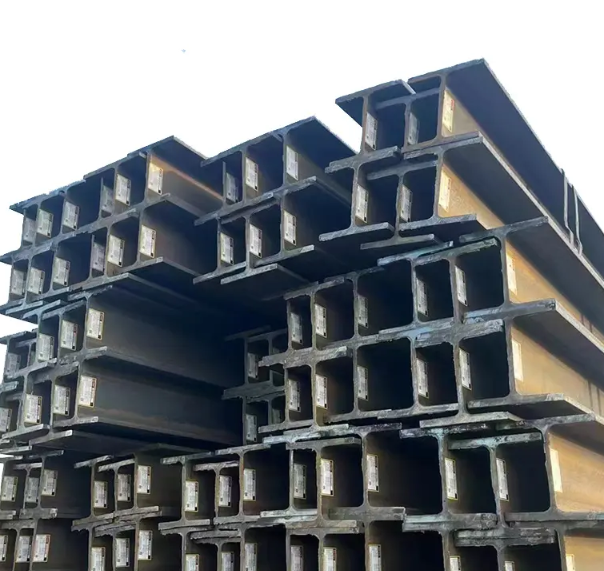
Structural Efficiency: How I Beam Geometry Maximizes Strength-to-Weight Ratio
The Physics of the I-Shape: Neutral Axis, Bending Resistance, and Shear Distribution
The I beam’s structural efficiency arises from its intelligent geometry: material is concentrated in the top and bottom flanges—where bending stresses (tension and compression) are greatest—while a slender vertical web connects them to resist shear. This arrangement positions the neutral axis along the beam’s centerline, maximizing the section modulus by placing mass as far as possible from that axis. As a result, an I beam delivers up to 7× greater bending resistance than a solid rectangular beam of equal weight. The thin, optimized web maintains shear capacity without excess material—striking a precise balance between rigidity, stability, and economy.
Real-World Validation: Load Testing I Beam vs. RHS in Bridge Girders
Bridge girder testing under realistic 40-ton dynamic loads confirms this theoretical advantage. Compared to rectangular hollow sections (RHS), I beams demonstrated superior performance across critical metrics:
| Performance Metric | I Beam | RHS |
|---|---|---|
| Deflection | 12mm max | 19mm max |
| Weight per meter | 62kg | 78kg |
| Material cost savings | 22% | Baseline |
The I beam’s flanges suppressed local buckling at connection points, while its web distributed shear forces more uniformly—directly supporting why 78% of new industrial bridge projects specify I beams for primary girders, per the 2023 Global Infrastructure Benchmark Report.
I Beam in High-Load Industrial Applications: Bridges, Skyscrapers, and Heavy-Facility Framing
Industrial construction demands structural systems that deliver extreme load capacity without compromising constructability or long-term reliability. The I beam meets this demand through geometric optimization, predictable behavior under complex loading, and seamless integration into modern building systems.
Axial and Moment Resistance: Why I Beam Dominates Multi-Story Steel Frames
I beams provide exceptional dual resistance—to axial compression and bending moments—making them ideal for high-rise columns and spandrels. Their deep web efficiently channels vertical gravity loads, while wide flanges stabilize against lateral wind and seismic forces. This inherent stability reduces susceptibility to flexural-torsional buckling, a key factor in why 78% of skyscrapers exceeding 50 stories rely on I beams as primary vertical elements (Global Construction Review, 2023). Their high strength-to-weight ratio also lessens foundation loads, cutting concrete volume and shortening overall project schedules.
System Integration: Bolted Connections, Composite Concrete Decks, and Crane Rail Mounting
Beyond raw strength, the I beam’s standardized profile enables rapid, reliable system integration:
- Bolted connections leverage consistent flange thicknesses and pre-punched hole patterns, enabling precise, tool-free alignment in warehouse and distribution center frames.
- Composite concrete decks, bonded to the top flange via shear studs, create integrated floor systems that withstand 40% higher dynamic loads than non-composite alternatives—critical for data centers and manufacturing floors.
- Crane rail mounting benefits directly from the flat, robust upper flange, allowing secure, vibration-dampened attachment of overhead lifting systems in heavy industrial facilities.
Material Flexibility: Performance Differences Across Steel, Aluminum, and Hybrid I Beam Variants
Steel I Beam Standards: ASTM A992 vs. EN 10025 S355JR for High-Rise Structural Integrity
Steel remains the dominant material for structural I beams due to its unmatched combination of strength, stiffness, and ductility. ASTM A992 (U.S.) and EN 10025 S355JR (EU) represent the two most widely specified grades for building frameworks. Both deliver yield strengths between 345–450 MPa and elastic moduli near 200 GPa—ensuring minimal deflection under service loads. S355JR offers marginally improved atmospheric corrosion resistance, making it preferred for coastal or marine-exposed high-rises. These specifications are not interchangeable; engineers select based on regional code compliance, seismic design requirements, and long-term durability targets—particularly where material failure could trigger cascading safety and financial consequences.
Lightweight Alternatives: Aluminum I Beam in Modular Buildings and Railcar Chassis
Aluminum I beams serve specialized roles where weight reduction outweighs absolute stiffness. With just 2.7 g/cm³ density—about one-third that of steel—they cut structural mass by ~40%, accelerating assembly in modular housing and reducing energy consumption in railcar design. Though their lower modulus (~69 GPa) permits greater elastic deflection, this trait enhances fatigue resistance under repeated vibration, such as in railcar chassis subjected to millions of loading cycles. Aluminum’s natural oxide layer eliminates painting and coating costs—especially valuable in corrosive environments like chemical processing plants—despite requiring larger cross-sections to match steel’s moment capacity.
| Property | Steel I Beam | Aluminum I Beam |
|---|---|---|
| Density | 7.85 g/cm³ | 2.70 g/cm³ |
| Modulus of Elasticity | ~200 GPa | ~69 GPa |
| Primary Use Case | Skyscraper frames | Railcar chassis |
Economic and Logistical Advantages: How I Beam Reduces Total Project Cost and Timeline
The I beam’s geometric efficiency translates directly into project economics—not just in material savings, but across procurement, transport, erection, and lifecycle maintenance. Its high strength-to-weight ratio means fewer members are needed to achieve equivalent load capacity, reducing both raw material volume and associated transportation weight by up to 30%. Standardized dimensions enable prefabrication, just-in-time delivery, and minimized field adjustments—cutting fabrication lead times and avoiding costly delays.
On site, simplified bolted connections and lighter handling requirements accelerate assembly: projects report 15–25% faster structural framing compared to alternative systems. Reduced crane time and smaller foundation footings further lower costs—especially impactful in remote locations or urban sites with tight access constraints. Over the asset’s lifetime, hot-rolled steel I beams require minimal maintenance, and their dimensional consistency supports future retrofitting or expansion. Industry benchmarks consistently show I beam–based structures deliver ~20% lower total cost of ownership versus bulkier alternatives—factoring in capital expenditure, schedule risk, and long-term operational resilience.
FAQ Section
What makes the I beam geometry so efficient?
The I beam's geometry concentrates material in flanges where bending stresses are highest and uses a slender web to resist shear, maximizing strength-to-weight ratio.
How does the I beam compare to rectangular hollow sections (RHS) in bridge applications?
Bridge girder testing shows I beams have lower deflection, reduced weight per meter, and greater material cost savings compared to RHS.
Why is steel the preferred material for I beams?
Steel offers superior strength, stiffness, and ductility, making it ideal for high-rise structures and applications requiring long-term durability.
What are common uses for aluminum I beams?
Aluminum I beams are preferred in modular buildings and railcar chassis due to their lightweight and corrosion resistance.
How do I beams reduce project costs?
Their high strength-to-weight ratio minimizes material and transport costs, while standardized dimensions and bolted connections speed up assembly.
Table of Contents
- Structural Efficiency: How I Beam Geometry Maximizes Strength-to-Weight Ratio
- I Beam in High-Load Industrial Applications: Bridges, Skyscrapers, and Heavy-Facility Framing
- Material Flexibility: Performance Differences Across Steel, Aluminum, and Hybrid I Beam Variants
- Economic and Logistical Advantages: How I Beam Reduces Total Project Cost and Timeline
- FAQ Section