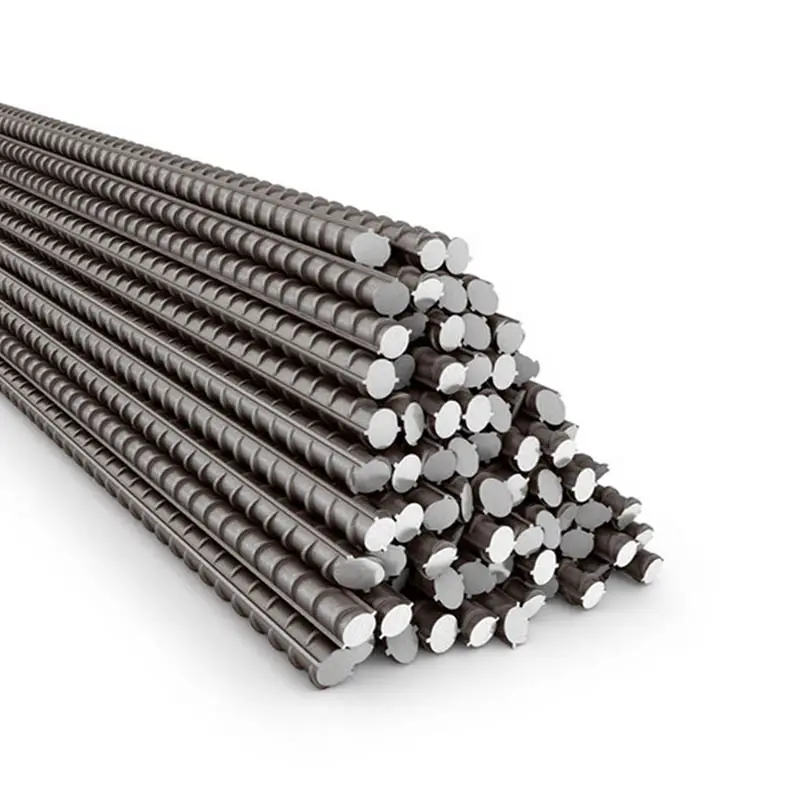

ASTM standard deformed steel bars are manufactured in accordance with specifications set by the American Society for Testing and Materials (ASTM), widely used in North America and projects adopting U.S. standards. The primary standard for deformed bars is ASTM A615, which covers carbon steel bars for concrete reinforcement, specifying grades based on yield strength: Grade 40 (280 MPa), Grade 60 (420 MPa), and Grade 70 (480 MPa), with Grade 60 being the most common. These bars feature a deformed surface with precise rib patterns to ensure optimal bond with concrete, as defined by ASTM A615, which regulates rib spacing, height, and orientation. Manufactured via hot rolling, the process controls cooling to achieve the desired microstructure, with some grades heat treated for higher strength. Chemical composition is tightly controlled, with limits on carbon, manganese, phosphorus, and sulfur to ensure weldability and mechanical properties. ASTM A615 bars are known for their consistent quality and reliability, critical for large scale projects like bridges, highways, and commercial buildings. They are tested for tensile strength, yield point, elongation, and bendability to ensure compliance, with mill certificates provided for traceability. Joints in reinforcement are typically made by lapping or welding, following ASTM guidelines for proper load transfer. As a globally recognized standard, ASTM deformed bars are also used in international projects where U.S. engineering practices are adopted, offering compatibility and ease of procurement for multinational constructions.