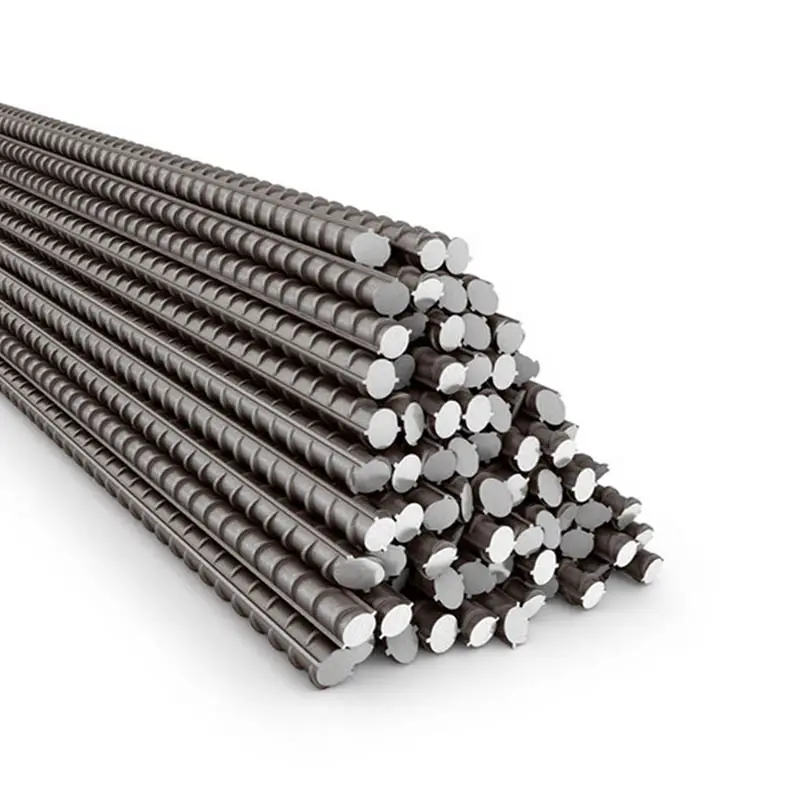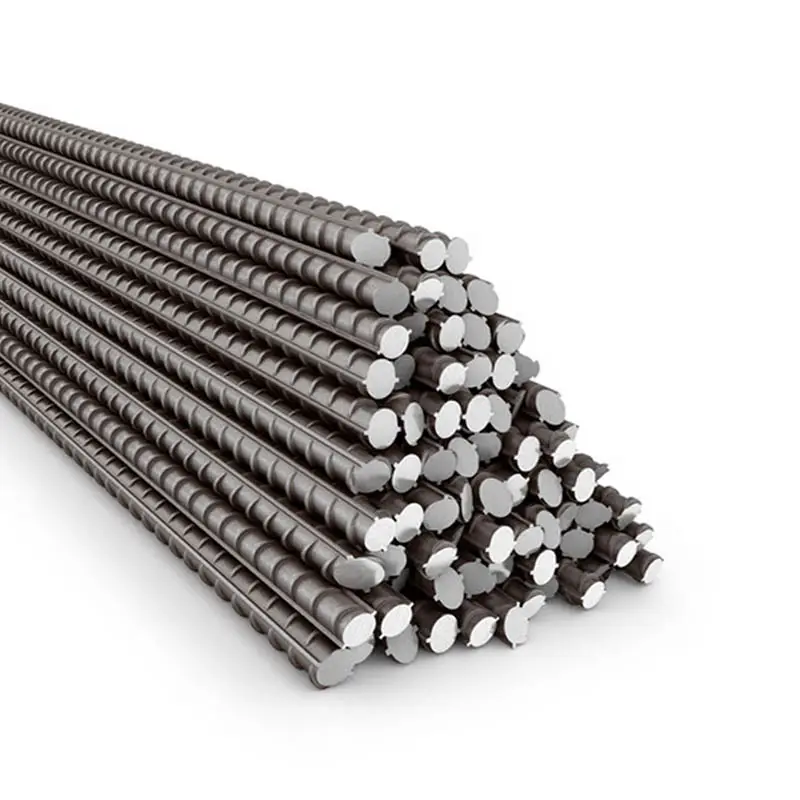

20mm deformed steel bar is a widely used construction material, distinguished by its ribbed surface that enhances bonding with concrete. With a nominal diameter of 20mm, it meets the tensile strength requirements of various structural applications, typically complying with standards like ASTM A615, BS 4449, or GB 1499.2, which specify mechanical properties such as yield strength (≥400 MPa for HRB400 grade) and tensile strength (≥540 MPa). The deformed surface, featuring longitudinal and transverse ribs, increases the contact area with concrete, preventing slippage and improving composite structural performance. Manufactured via hot rolling, the process involves heating billets to austenitic temperature, rolling into shape, and cooling to form a ferrite pearlite matrix for balanced strength and ductility. Some grades undergo quenching and tempering to achieve higher strengths (e.g., HRB500 with yield strength ≥500 MPa). 20mm bars are ideal for medium to large concrete structures, such as building frames, bridges, and foundations, where they serve as main reinforcement to bear tensile loads. Their diameter strikes a balance between construction efficiency and structural requirements—larger diameters reduce the number of bars needed but may complicate bending, while smaller diameters are better for dense reinforcement. Installation involves cutting, bending, and welding or lapping to form a reinforcement cage, with spacing and arrangement determined by design codes. Quality control includes tensile, bend, and chemical composition tests to ensure compliance. As a standard size, 20mm deformed bars are readily available globally, with consistent performance making them a staple in construction projects of various scales.