
 EN
EN
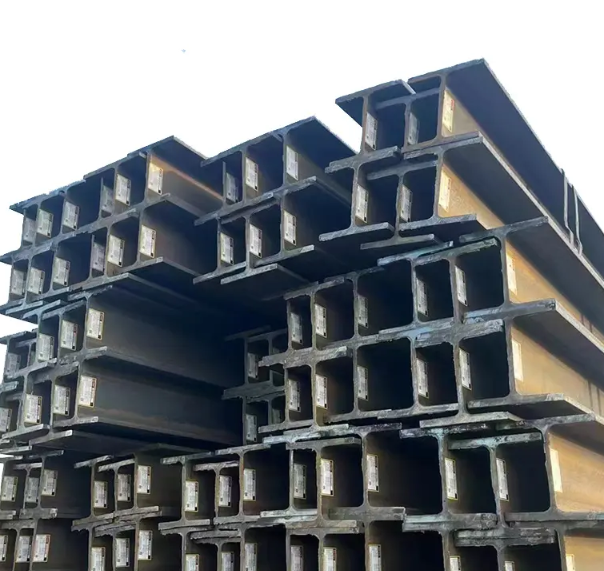
Core Structural Differences: Shape, Flange Geometry, and Manufacturing
Cross-Sectional Profile: Parallel Flanges (H Beam) vs. Tapered Flanges (I Beam)
What sets H beams apart from regular I beams is basically their flange shape. With H beams, both inside and outside flange surfaces run perfectly parallel, giving them that clean rectangular look which spreads weight evenly throughout the structure. This makes them sit better when connected to other parts through bolts or welds. Standard hot rolled I beams tell a different story though. Their flanges actually slope inward towards the center part of the beam, something engineers call about a 14 to 1 angle, making those edges thinner as they go inward. Sure, this design saves on materials, but there's a catch. The stress tends to build up right where the flange meets the main body, and the connection points just don't cover as much surface area. Look at it this way: H beams give roughly 15 percent more contact space on those flanges compared to similar sized I beams. That extra surface matters a lot for columns that need to handle forces coming from multiple directions.
Web Thickness and Flange Proportions: How They Affect Section Modulus and Buckling Resistance
The relationship between flange width and web thickness plays a major role in how well structural members resist bending forces and avoid buckling issues. H beams generally feature much wider flanges compared to standard I beams, sometimes reaching about 40 percent greater width alongside thicker central webs. This design leads to better section modulus numbers overall. As noted in the AISC Steel Construction Manual, these dimensions actually reduce critical buckling stress levels by around 18 to 25 percent when dealing with axial compression forces, which makes them much stronger against those pesky lateral torsional buckling problems we all know about. On the flip side, I beams have their narrower, more tapered shape that gives them excellent strength to weight ratios for simple bending applications, though they tend to buckle locally at the flanges more easily under certain conditions. Looking at web thickness alone tells another story too. H beams typically sport 20 to 30 percent thicker webs across the board, giving them superior shear capacity and making them less likely to suffer from web crippling when subjected to concentrated loads during installation or operation.
Production Methods: Hot-Rolled I Beams vs. Welded/Fabricated H Beams
The way things get made really affects how different structural shapes work. Take standard I beams for example. These are typically made using hot rolling techniques. The process starts with heating up steel billets until they're malleable enough to pass through a series of rollers. As the metal moves along, it gets shaped into those characteristic tapered flanges we see in construction projects everywhere. This rolling method produces consistently sized beams that can run as long as 60 feet when manufactured in bulk quantities. When looking at H beams though, manufacturers have more options available. For smaller sizes, hot rolling still works fine, but once we start talking about larger dimensions (anything over 16 inches deep generally), welding becomes necessary. Fabricators cut individual flange and web plate components first, then join them together using automated submerged arc welding equipment. This approach lets engineers create customized proportions that just aren't possible with traditional rolling methods alone. Welding does give us better control over reinforcing critical stress points in structures, but there's always extra attention needed during quality checks since residual stresses from welding can sometimes weaken materials over time if not properly managed.
Load-Bearing Performance: Bending, Shear, and Torsional Behavior
Bending Strength and Moment of Inertia: Why H Beams Offer Superior Axial Load Capacity
The H beam design offers better bending resistance thanks to those parallel flanges that create more distance from the neutral axis, boosting the moment of inertia (I). This makes them stiffer when dealing with both axial forces and bending stresses. With wider flanges than standard I beams, H beams can handle around 20% higher section modulus values, meaning they support heavier vertical loads while deflecting less. Regular I beams have tapered flanges that tend to focus stress right at the web area, making them less suitable for column work where even load spread and buckling resistance matter most. According to AISC guidelines and what we see in practice, structural engineers go for H beams in tall buildings and bridge supports whenever compressive stability simply cannot be compromised.
Shear Distribution and Torsional Stiffness: Impact of Web-to-Flange Ratio
The way materials behave under shear forces versus how they respond to twisting loads varies quite a bit depending on their shape. H beams have those thick central webs and flanges that are nicely proportioned side to side, so when force pushes across them, the stress spreads out evenly rather than causing warping issues. Plus, their almost rectangular cross section gives them much better resistance to twisting compared to regular I beams that are just open shapes. A study in the Journal of Structural Engineering backs this up showing H beams handle twisting forces about 35 percent better while weighing the same as standard beams. Why does this happen? Well, most H beams come with a good balance between web thickness and flange width usually something like 1 to 1.5 ratio. This design helps avoid those hot spots where stress builds up too much in I beams when subjected to multiple types of forces at once.
Practical Application Guidelines: Selecting the Right Beam for Your Project
When to Choose an I Beam: Cost-Efficient Solutions for Medium-Span Framing and Floor Joists
When looking at structures that span between 6 to 15 meters and need to handle regular loads like what we see in home construction projects, mezzanines inside buildings, or warehouse floor supports, I beams tend to be the most budget friendly option available. The design features of these beams include narrower flanges and lighter web sections which cut down on overall weight compared to similar sized H beams by around 12 to maybe even 18 percent. And despite being lighter, they still hold up well against bending forces. That's why many builders choose them when trying to keep both the weight of the structure itself and the materials costs as low as possible, as long as there aren't going to be serious twisting forces involved and the connections aren't going to get too complicated. Plus, because they take up less space, installing things like HVAC ductwork, electrical wiring, and plumbing pipes becomes much easier when working within ceiling spaces during construction.
When to Choose an H Beam: High-Load Columns, Bridge Substructures, and Long-Span Applications
H beams become essential for heavy axial loads, spans exceeding 20 meters, or complex stress environments. Their parallel flanges and robust web-flange proportions provide up to 30% higher section modulus against buckling—making them the preferred choice for:
- Multi-story columns supporting high vertical compression loads
- Bridge piers and transfer girders subjected to multidirectional forces
- Industrial facilities requiring enhanced vibration dampening
- Long-span roof systems demanding strict deflection control
The broader, uniform flange geometry also improves weld penetration and joint integrity during fabrication of heavy connections—critical for safety-critical infrastructure.
Frequently Asked Questions (FAQ)
What is the main difference between H beams and I beams?
The main difference lies in their flange shape: H beams have parallel flanges, while I beams have tapered flanges. This affects their load distribution and structural applications.
Why are H beams preferred for heavy-load applications?
H beams offer better axial load capacity and bending resistance due to their wider flanges and thicker webs, making them suitable for heavy-load applications like bridge piers and multi-story columns.
When should I use an I beam over an H beam?
I beams are cost-effective for medium-span framing and regular load applications where budget constraints are crucial, and space is limited.