
 EN
EN
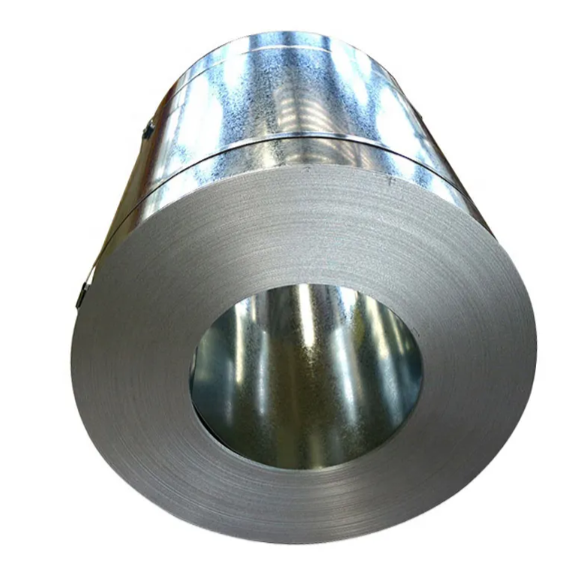
Understand Carbon Steel Grades and Standards for Carbon Steel Coil
Navigating carbon steel coil specifications begins with mastering industry-standard grading systems. These frameworks—primarily ASTM (American Society for Testing and Materials) and AISI/SAE (American Iron and Steel Institute/Society of Automotive Engineers)—dictate material properties and ensure consistency across suppliers and applications.
Decoding ASTM A1011, A656, and A108: Key Specifications for Carbon Steel Coil
ASTM standards define critical performance benchmarks:
- A1011: Governs commercial-grade steel coil for forming and stamping, with subtypes like SS (structural) and CS (commercial)
- A656: Covers high-strength low-alloy (HSLA) coils for weight-sensitive structural uses
- A108: Specifies cold-finished bars but informs coil tolerance expectations for machined parts
These codes specify minimum yield strength (e.g., 50 ksi for A656 Grade 80) and permissible surface defect limits—critical for downstream processing reliability.
AISI/SAE Numbering System Explained: What '1045' and '1095' Reveal About Your Carbon Steel Coil
The AISI/SAE system uses 4-digit codes to disclose composition:
- First two digits indicate alloy family (10xx = plain carbon steel)
- Last two digits specify average carbon content in hundredths of a percent
Thus, 1045 steel coil contains 0.45% carbon—optimized for shafts and gears—while 1095 (0.95% carbon) offers extreme hardness for cutting tools but requires controlled heat treatment to avoid brittleness.
Match Carbon Content to Application Requirements in Carbon Steel Coil
Low-, Medium-, and High-Carbon Steel Coil: Strength, Ductility, and Formability Trade-Offs
The amount of carbon in steel determines how it performs when made into coils. Low carbon steels contain between about 0.04% to 0.30% carbon and work best when we need materials that can be shaped easily and welded together. These are commonly used in car body parts or tubes that get bent during manufacturing processes. Medium carbon coils fall somewhere in the middle range at around 0.31% to 0.60% carbon content. They give roughly 15 to maybe even 20 percent better strength compared to their low carbon counterparts without completely losing the ability to bend them for making things like gear components through forging methods. When we look at high carbon coils containing anywhere from 0.61% up to 1.50% carbon, they become extremely hard and resistant to wear but lose almost all ability to be formed into different shapes. Because of this limitation, these types of coils find their niche in specialized areas such as manufacturing cutting tools or springs where there's no need for the material to deform during use.
| Carbon Grade | Carbon Range | Key Properties | Primary Trade-Offs |
|---|---|---|---|
| Low-Carbon | 0.04%–0.30% | High ductility, easy forming, excellent weldability | Lower strength, limited wear resistance |
| Medium-Carbon | 0.31%–0.60% | Balanced strength/ductility, good machinability | Requires preheating for welding, reduced formability vs. low-carbon |
| High-Carbon | 0.61%–1.50% | Extreme hardness, superior wear resistance | Brittleness, poor weldability, minimal formability |
How Carbon Percentage Directly Affects Hardness, Weldability, and Machinability of Carbon Steel Coil
For every 0.1% boost in carbon content, we see hardness go up around 10 HV points on the Vickers scale, though ductility takes a hit of roughly 5 to 7 percent at the same time. When carbon levels cross 0.25%, weldability drops off a cliff because martensite starts forming in those heat affected areas. That's why medium carbon coils need preheating somewhere between 150 and 260 degrees Celsius before welding to stop cracks from appearing. High carbon grades? Well, they just don't play nice with welding equipment most of the time. Speaking of machining, medium carbon steels with about 0.40% to 0.50% carbon work best since the chips break predictably during cutting operations. Low carbon steel tends to get all sticky and messy in the machine shop, while high carbon variants wear down tools at an alarming rate thanks to their abrasive nature.
Assess Coil-Specific Quality Indicators: Surface, Geometry, and Consistency
Pancake vs. Oscillate-Wound Carbon Steel Coil: Impact on Tolerance, Uncoiling, and Downstream Processing
Carbon steel coils that are pancake wound have layers stacked really close together which makes them denser but can actually cause problems when they get unrolled because of all the built-up tension. The way these coils are made keeps them within about 0.005 inches thickness tolerance, which is great for those precision stamping jobs. However there's a tradeoff here too since this method tends to make edge waves appear more often and sometimes even leads to broken coils. On the flip side, oscillate wound coils work differently. They're wrapped in a crisscross pattern that cuts down on internal stress somewhere around 15 to 20 percent. This helps them feed much better through those automated presses. Sure, their dimensions might not be as tight as pancake wound ones (around 0.008 inch variance), but what oscillate winding does prevent are those annoying telescope defects during fast production runs. Most manufacturers go with oscillate winding when dealing with deep drawing applications where keeping the material flowing consistently matters most.
Surface Defect Limits for Carbon Steel Coil: Interpreting Scale, Scratches, and Edge Cracks per ASTM A480
The ASTM A480 standard sets clear limits on surface flaws for carbon steel coils, and any defects that go beyond certain depth to width ratios will result in rejection since they compromise structural integrity. Scale buildup is allowed up to about 0.1 mm thick, but anything scratchier than 0.5% of the material's total thickness needs fixing before proceeding. When edge cracks extend past 2 mm away from where the coil was cut, those parts just don't make the grade according to industry standards. To catch problems we can't see with our eyes alone, inspectors use both visual checks and advanced laser profiling techniques. This combination helps spot hidden flaws beneath the surface. Only coils showing no more than roughly 0.3% overall defects get sent through to the coating process, which stops potential corrosion spots from forming in the final product down the line.
Validate Quality Through Documentation and Third-Party Testing
Thorough documentation and independent verification are non-negotiable for ensuring carbon steel coil meets specifications. Mill test certificates (MTCs) provide traceability, confirming chemical composition and mechanical properties align with ordered grades like ASTM A1011 or AISI 1045. Review these for:
- Heat number traceability
- Actual yield/tensile strength versus ordered values
- Compliance with dimensional tolerances (e.g., thickness ±0.005")
Third-party testing eliminates bias in critical validations. Accredited labs perform:
- Chemical analysis via spectrometry
- Destructive tensile/bend testing
- Surface defect mapping per ASTM A480
This independent verification catches non-conformances missed by in-house QA, reducing field failures by 34%. For high-risk applications (pressure vessels, structural components), insist on witnessed testing at manufacturing sites. Robust documentation protocols combined with third-party validation transform claims into auditable evidence of quality.