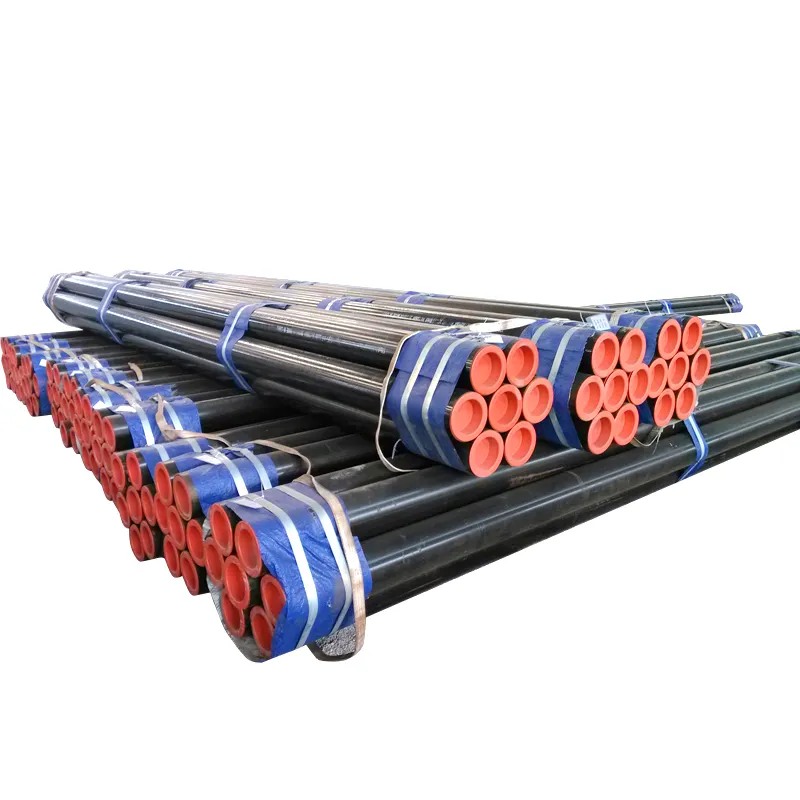

High temperature seamless steel pipe is engineered to withstand continuous service at temperatures up to 650°C, critical for applications in power generation, petrochemical refining, and industrial furnaces. These pipes are manufactured from alloy steels containing chromium, molybdenum, or vanadium (e.g., ASTM A335 P91, ASME SA213 T22) to maintain strength and resist oxidation at elevated temperatures. The seamless manufacturing process—either hot extrusion or piercing—eliminates weld seams, reducing failure points in high stress environments. Key properties include high creep resistance (minimum 1% elongation in 100,000 hours at 550°C), thermal stability (low coefficient of expansion), and oxidation resistance (formation of protective oxide layers like Cr₂O₃). Standards such as ASTM A213 (boiler tubes) and EN 10216 2 (heat resistant steel pipes) specify chemical composition (e.g., Cr 2.25–9%, Mo 1–1.25%) and mechanical tests (hardness, impact resistance at service temperature). Surface treatments may include anti oxidation coatings (aluminum diffusion) for extreme conditions, while dimensional precision (OD tolerance ±0.5%, wall thickness ±5%) ensures compatibility with flanged connections in high temperature pipelines. These pipes are used in superheaters, reheaters, and process heaters, where failure could lead to catastrophic downtime, making rigorous quality control (eddy current testing, grain size analysis) essential to meet industry standards.